
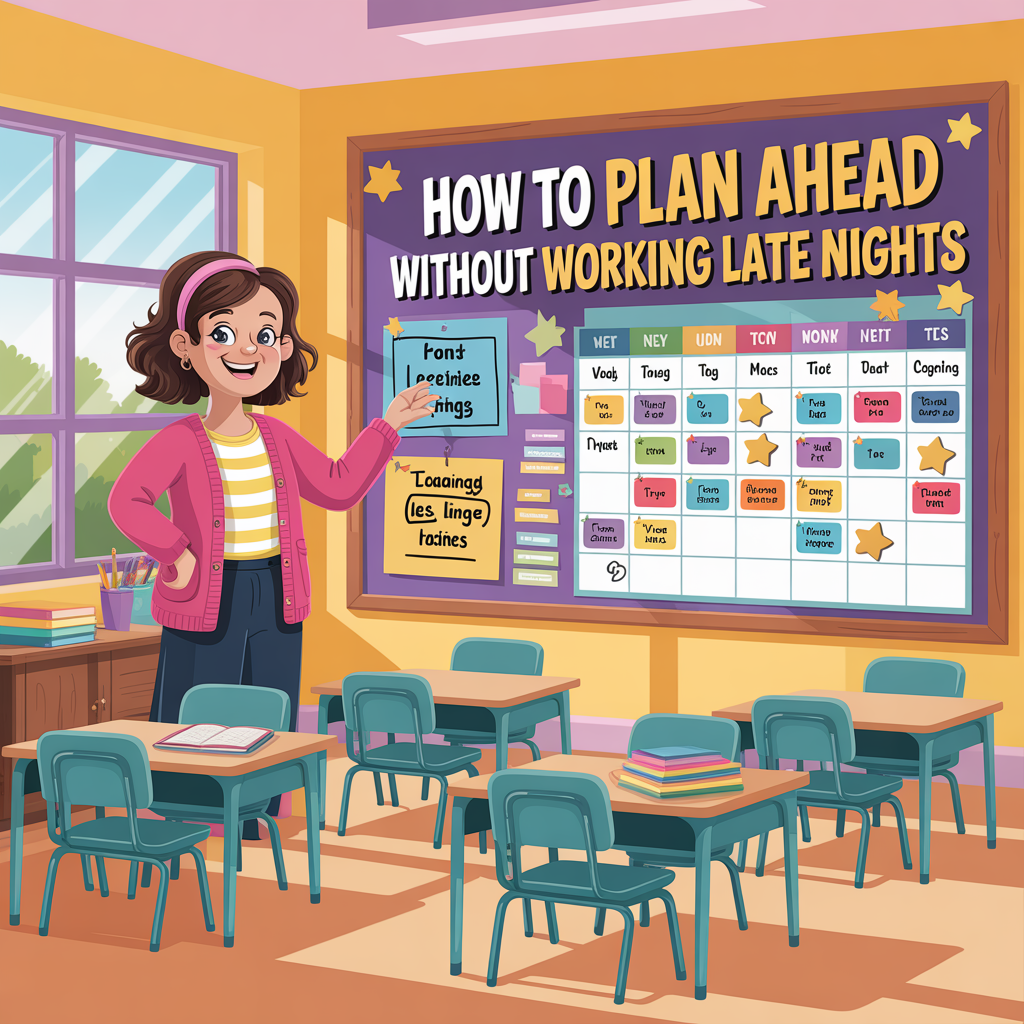
How to Plan Ahead Without Working Late Nights
If lesson planning keeps sneaking into your evenings, you're not alone. For elementary teachers, it's rarely one big problem. It's too many tiny tasks, surprise schedule changes, and that quiet pressure to make everything Pinterest-perfect.
The goal isn't to work harder, it's to plan earlier, on purpose, during contract hours. Below is a simple system that helps you map the week, reuse what works, and protect your afternoons, so planning stops following you home.
Start with a weekly plan that fits inside your contract time
Pick one planning block you can defend, even if it's only 45 minutes. Then treat it like a meeting. Close your door, silence notifications, and start with the "big rocks" first: standards, your unit focus, and any assessments or check-ins you need.
Next, rough in daily structures (reading block, math block, small groups). Finally, leave small gaps on purpose. Those gaps catch real life: assemblies, behavior surprises, a student who needs extra time, or the copy machine line.
If you want a simple layout that matches this approach, a weekly lesson plan template walkthrough can help you set up your week fast without overthinking it.
Planning ahead works best when you leave space for the day you'll actually have.
Use a 30 minute Monday map so the week stops feeling urgent
Set a timer for 30 minutes. Check the school calendar, list deadlines (IEP meetings, specials changes, observations), then choose three priorities for the week. Assign each to a day.
For example: reading groups on Tuesday, math centers refresh on Wednesday, spelling checks on Friday. When the timer ends, stop. You're building a map, not writing a novel.
Batch similar tasks so you don't reset your brain all day
Switching tasks all day burns time. Instead, batch: print and copy once, write parent messages in one sitting, plan all small groups together, and prep centers assembly-line style. Fewer resets means fewer "I'll just finish tonight" moments.
Build a "good enough" lesson template you can reuse all year
Night planning often comes from reinventing the wheel. A reusable template turns planning into filling blanks, not starting from scratch. Consistency also helps kids feel safe, especially in early grades and mixed-need classrooms.
Decide what stays the same most days, then plan around that routine. Your creativity still shows up, but it shows up inside a structure that saves your time.
Pick one simple structure for each subject and stick to it
Try a basic pattern: mini-lesson, guided practice, independent work, quick check. Students learn the rhythm quickly, so transitions get smoother, and planning gets faster because you're swapping content, not rebuilding the whole lesson.
Keep a grab and go bank for fast changes and interruptions
Keep a short list ready for the weeks that go sideways:
Read-aloud list
Early finisher pages
Partner games
No-prep phonics practice
Math fluency routine
With a bank like this, you won't need late-night pivots when the schedule shifts.
Protect your afternoons with boundaries that actually work
Boundaries don't have to be dramatic to work. Set a daily stop time, then choose what you'll skip when the day runs long. Also, keep communication short and steady, so messages don't take over your night.
End each day with a 10 minute reset so tomorrow starts clean
Before you leave, do a quick reset:
Tidy two "hotspots" (teacher table, small group area)
Set out the first materials
Glance at tomorrow's schedule
Write the first three tasks for the morning
This keeps tomorrow from feeling like an emergency.
Say no to perfection traps that quietly create late nights
Common traps include over-decorating slides, rewriting plans, grading everything, or making brand-new centers weekly. Replace them with reuse, spot checks, simple rubrics, student helpers, and one rule: done beats fancy.
To Sum It Up…
Planning ahead without late nights comes down to three moves: a weekly map, reusable lesson templates, and boundaries that protect your afternoons. Start with one change this week, not all of them. After all, the point of planning is better teaching, not longer days. Guard your evenings, your future self will thank you.