
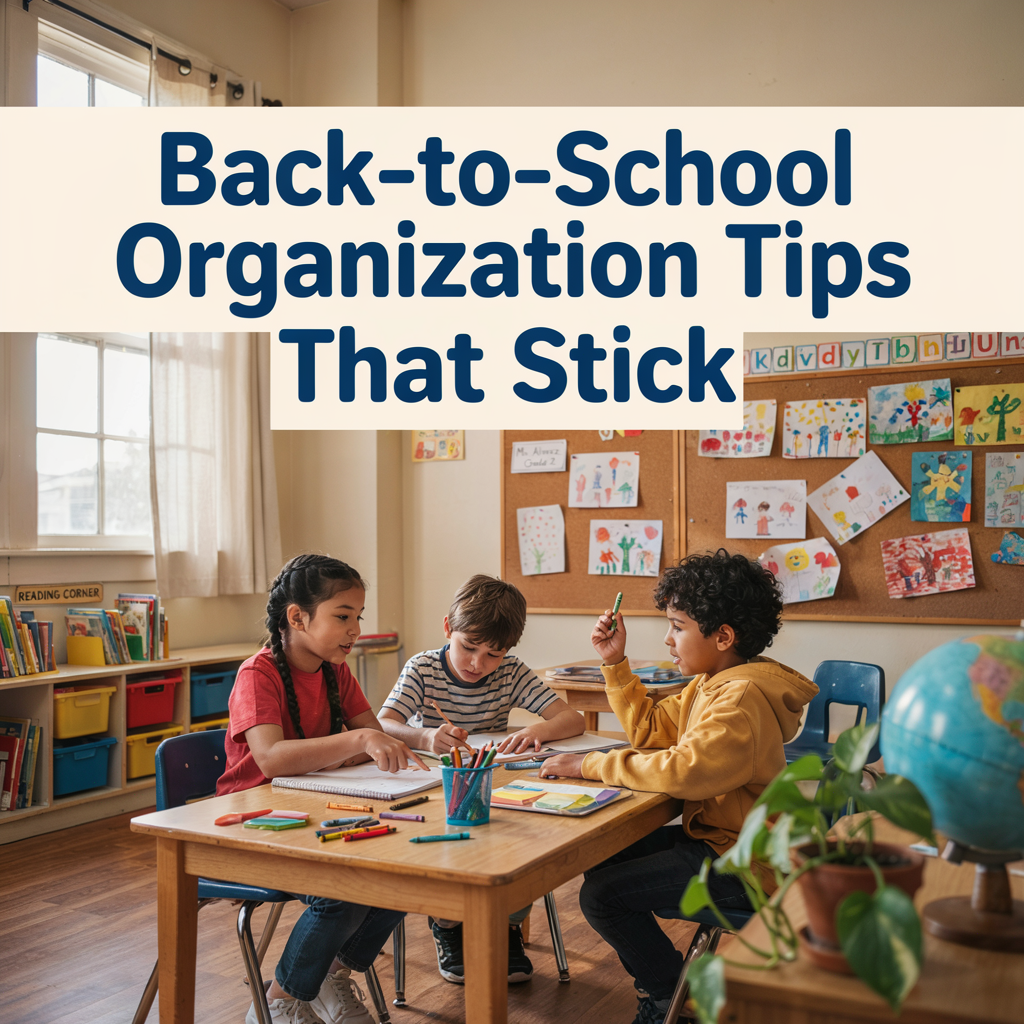
Back-to-School Organization Tips That Stick
A classroom can look ready on the first day and still fall apart by Friday. Supplies disappear, papers pile up, and students ask where everything goes, again and again.
The goal isn't a picture-perfect room. Back-to-school organization works when students can use the systems without waiting for you. Start with simple spaces, repeatable routines, and a short weekly reset.
Build a Classroom Setup That Saves Time Every Day
Think about how students move through the room before choosing where things belong. If students use scissors at their tables, keep the shared scissors close to those tables. If they turn in work after math, the turn-in spot should be easy to reach on the way out.
Clear labels do a lot of the teaching for you. Use words, pictures, or both. Young students may need a photo of glue sticks on the glue bin. Older students still benefit from labels that make the right choice obvious.
Keep the room useful, not crowded. Every extra bin, poster, and loose item gives students one more thing to manage.
Create Simple Homes for Supplies, Papers, and Technology
Give every commonly used item one clear home. Pencils, glue, scissors, crayons, headphones, tablets, and chargers should not move around the room depending on the day.
Set up a few predictable zones:
Shared supplies belong in color-coded bins near student work areas.
Unfinished work goes in one labeled folder or tray.
Graded work and family papers go in a take-home folder.
Permission slips need one collection spot, not your desk.
Classroom devices need numbered spaces so students know where each one returns.
Avoid filling bins to the top. Students can't put things back neatly when a container is already packed. Keep backup pencils, glue, and paper in a teacher-only cabinet. The daily supply area should hold what students need now, not every extra item you own.
If students have to ask where something goes, the system needs a clearer home.
Prepare a Teacher Workstation Without Creating Clutter
Your desk doesn't need to hold the whole school year. Keep only current materials within reach: today's lesson notes, attendance information, your planner, and anything that needs attention.
A simple folder or tray system can help. Use labels such as To Do, Copy, Grade, and File. When a paper lands on your desk, put it in one of those places right away.
Store past units in labeled drawers or digital folders. A clear desk won't solve every busy day, but it makes the next decision easier.
Teach Organization Routines Before You Need Them
Students aren't born knowing how to manage folders, cubbies, pencils, and papers. They need to see the routine, practice it slowly, and get feedback before you expect independence.
Model the process as if you are a student. Show where the backpack goes. Show how to turn in work. Show what happens when a pencil breaks. Then let students try it while you watch.
Practice arrival, cleanup, transitions, dismissal, and packing folders during the first weeks. It may feel slow, but it saves time later when everyone knows what to do.
Use Visual Schedules and Step-by-Step Directions
A posted schedule answers one of the most common classroom questions: "What are we doing next?" It helps students prepare for transitions and reduces repeated directions.
Keep the schedule easy to update. A pocket chart, magnetic board, or printed cards work well. When plans change, change the visual schedule too.
Short checklists also help students work without waiting for you. Your arrival checklist might say:
Hang up your backpack.
Turn in your folder.
Choose breakfast or begin morning work.
Check the board.
Use the same idea for independent work, changing classes, and packing up. Teach students to check the visual before asking for help.
Give Every Student a Repeatable Organization Routine
Students do better with the same order every day. A simple routine might be: check the board, gather materials, complete the task, turn it in, and return supplies.
Teach students how to organize their desks, folders, and cubbies in small steps. Don't hand them a messy desk and say, "Clean it." Show what stays, what goes home, and where unfinished work belongs.
Set aside a few minutes each week for desk or folder checks. Frame it as practice, not punishment. Students are learning how to take care of their tools.
Make Paperwork and Digital Files Easy to Find
Paper piles grow fast in elementary classrooms. Separate student work, family forms, assessment notes, and lesson materials before they become one large stack.
For digital files, use names that tell you what the file is without opening it. Try a format like 2026-09-Grade2-Reading-Unit1. Keep folders for the current week, reusable resources, and archived work.
Sensitive student information needs extra care. Store it in a secure location, not in open bins, student-accessible folders, or a pile on your desk.
Keep Classroom Organization Working All Year
A good system needs short check-ins. Without them, the turn-in tray overflows, the pencil bin runs dry, and papers from September are still sitting under October's lesson plans.
You don't need a huge cleanup day. Small routines are easier to keep.
Use a Weekly Reset to Prevent Small Messes From Growing
Reserve 10 to 15 minutes at the end of each week. Clear turn-in trays, recycle outdated papers, restock supplies, update next week's materials, and check the classroom calendar.
Students can help with age-appropriate jobs. One student checks pencils. Another straightens the library. A third collects loose papers. Post a short reset checklist so the work doesn't depend on your memory after a long Friday.
Review What Isn't Working and Simplify It
When a system fails, don't assume students are the problem. Look at the setup first. Are the labels clear? Is the bin too far away? Does the routine have too many steps?
Ask yourself: Can students use this without help? Does it save time? Do they know where it belongs?
Change one part at a time, then test it for a week. A better label or a closer supply bin can fix more than a complicated new system.
A Classroom That Supports Learning
The strongest organization systems are simple, visible, and practiced often. Begin with one or two high-impact routines, then build from there.
Your classroom doesn't need to look perfect to work well. An organized room gives students more independence and gives you more time to teach.