Using Dice Games To Engage Students
A cup of dice can change the feel of a lesson. The rattle, the roll, the quick cheer when a student hits a lucky number, it all pulls kids in fast.
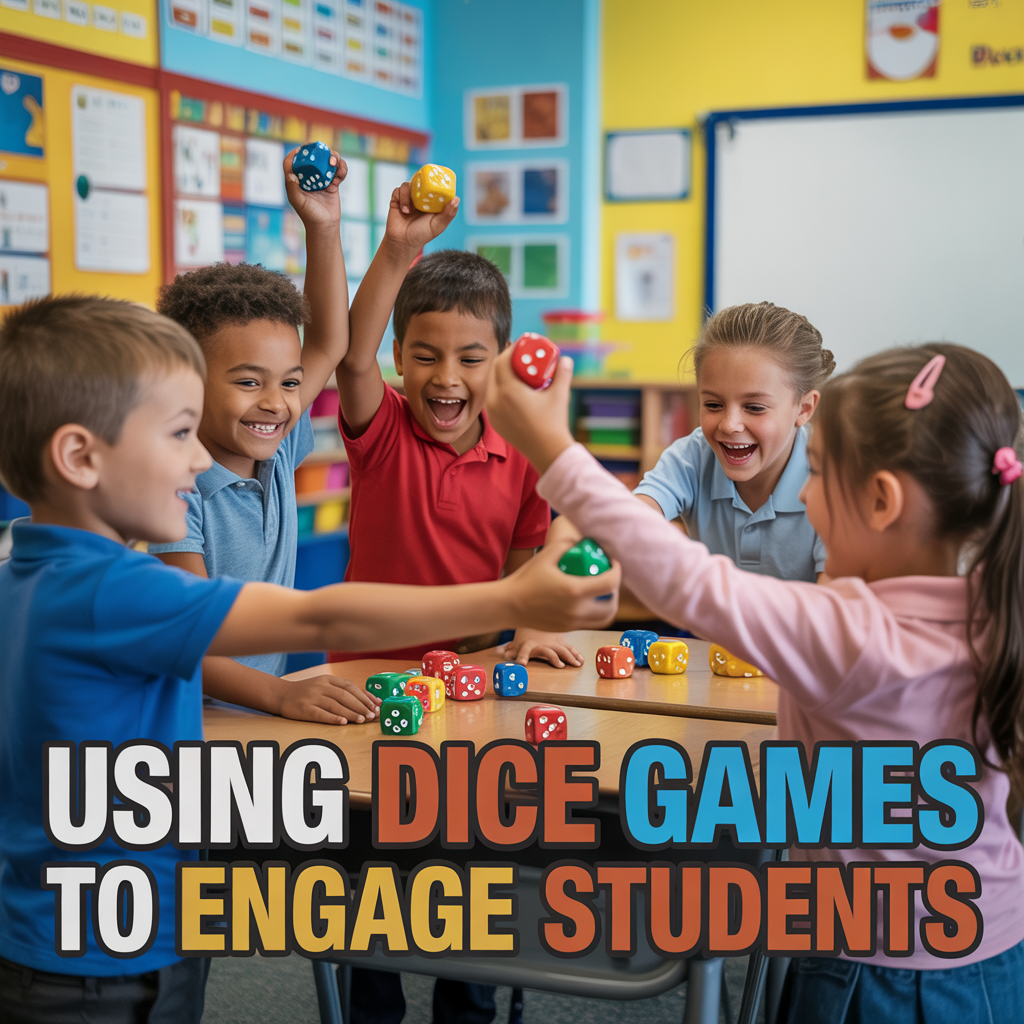
For elementary teachers and homeschool parents, dice games are a low-cost, hands-on way to build real skills. You get practice in math facts, reading, and even social skills, without stacks of prep or expensive materials.
Why Dice Games Keep Students Engaged and Learning
Dice are simple, but they pack a lot of teaching power. Used well, they keep kids active, curious, and focused on real learning, not just entertainment.
Simple materials, fast setup, big impact
Dice are cheap, sturdy, and easy to store in a small basket or plastic tub. You can pull them out for a 5 to 10 minute warm-up, a center, or a quick review at the end of a lesson.
They work in almost any setting. Whole group on the carpet with a projected chart. Small groups at a table. One-on-one practice during homeschool or intervention.
Because setup is so quick, you actually use the games often. There is no big prep wall in the way. If you ever need more ideas, the collection of teacher-tested dice games on We Are Teachers can give you fresh variations to plug into your routine.
Built-in suspense that grabs attention
The moment students hear dice roll, their brains kick in. What number will come up? Will we hit our target? That tiny bit of suspense keeps eyes on the table and minds on the task.
While they wait for each roll, students practice patience and self-control. They learn to take turns, accept what the dice show, and handle small wins and losses. That is quiet social-emotional practice built right into the game.
You also get better on-task behavior. Kids are less likely to drift when they are watching for their turn and checking each roll against a goal.
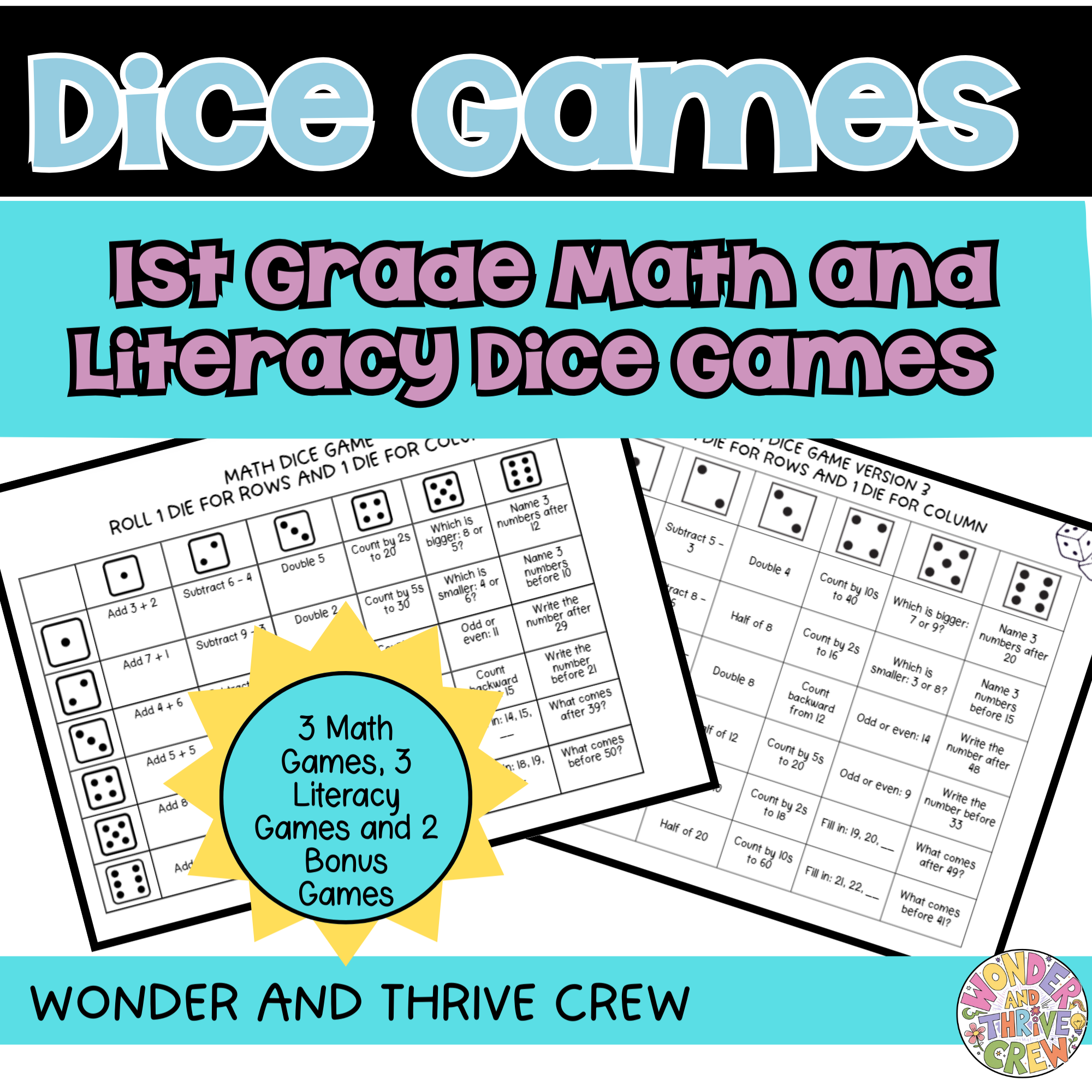
1st Grade Dice Games, Kindergarten and 2nd grade also available.
From math practice to language skills and social-emotional learning
Most people think of dice as a math tool, and they are great for that. You can quickly set up:
Addition and subtraction races
Multiplication fact practice
Target-number games that grow number sense
Easy Dice Games You Can Use Tomorrow in Class or at Home
These games are designed for quick setup and real skill practice. Use them in centers, math groups, morning work, or homeschool lessons.
Roll and Add: Quick math fluency practice
Materials: 2 dice per student or pair, recording sheet or whiteboard, pencil or marker.
How to play: Students roll two dice, add the numbers, and write the sum. They can keep a running list of sums or tally how many times each sum appears.
What students practice: Addition fluency, counting on, and mental math. As they see common sums, they start to recognize them without counting every dot.
Variation: Use three dice for older students, or ten-sided dice to reach higher sums. Ask students to show different ways to make the same sum, such as 8 + 4 and 6 + 6 for 12, to build flexible thinking.
There are many ways to use dice to improve math skills. I have shared only a few of the ways you can use dice to have more fun and increase the learning. This is a great activity for early finishers. Set up the boards, dice in advance and then you are ready for fun.